← Blog EnsayoEssay

La IA no va a sustituir a los bailarinesAI is not going to replace dancers

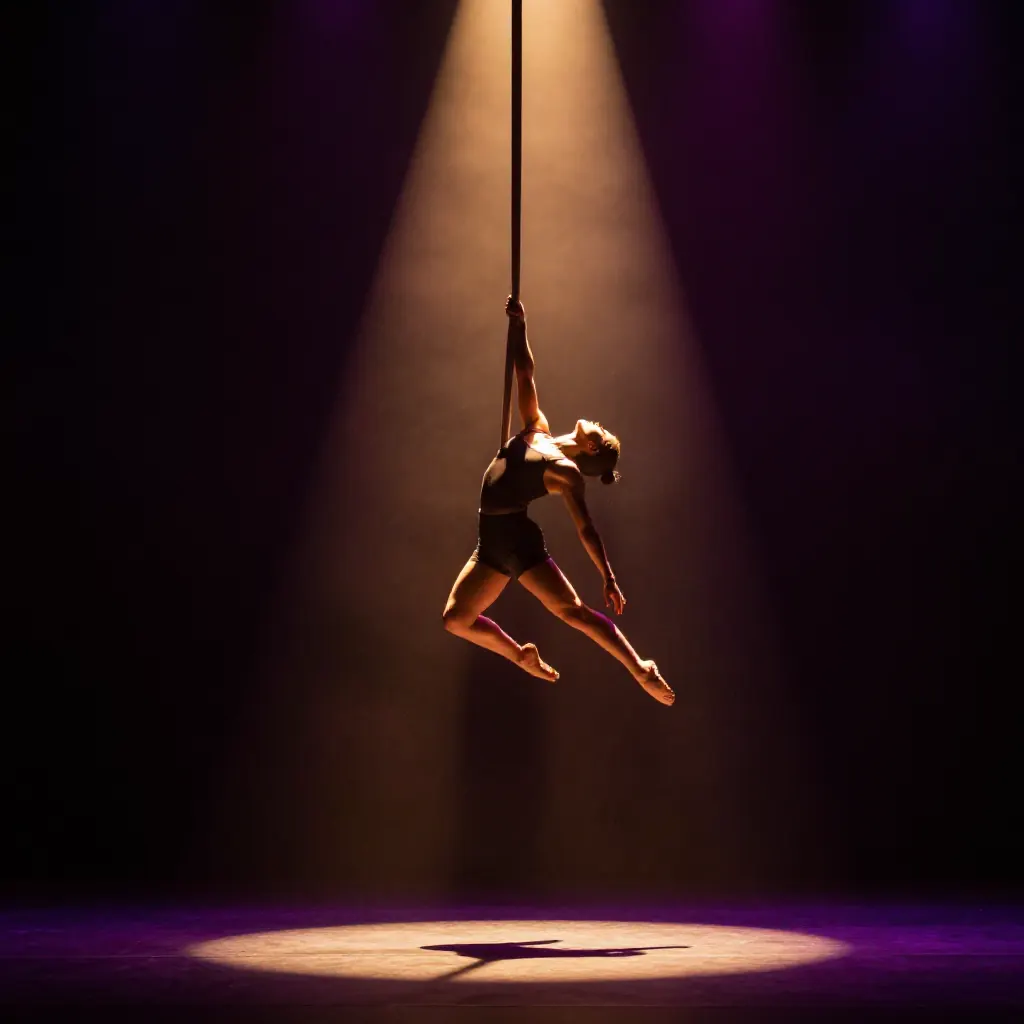
Bailarina aérea suspendida en trapecio bajo un haz de luz dorada en un escenario oscuro

Tenía 21 años cuando mi madre murió, sin aviso. Me quedé muy triste, literal, de esas tristezas que no caben en el cuerpo. Por esas fechas fui al Teatro de la Danza a ver una pieza de trapecio de Gerardo Hernández. Un cuerpo colgado a varios metros del piso, sin efectos de por medio, me hizo sentir algo que ningún doctor, ningún libro, me había hecho sentir en meses. Ese día decidí que quería dedicarme a eso.

Entrené danza aérea doce años, entre el trapecio y el piso, aprendiendo que el cuerpo es un instrumento igual que un violín o un chelo. Uno no ve la técnica cuando alguien toca bien un instrumento: ve la emoción que sale de él. Lo que se ve en el escenario, si de verdad está pasando algo, no es una serie de movimientos correctos. Es el alma de quien los ejecuta.

El cuerpo puede fallar. Ese es el punto. Una caída real produce una atención única, irrepetible, porque el público sabe, en algún lugar animal de su cerebro, que ahí hay riesgo de verdad. Un instrumento perfecto no es lo mismo que un instrumento que siente.

He visto ya animaciones generadas por inteligencia artificial que imitan cuerpos bailando, técnicamente impresionantes: proporciones perfectas, movimientos que ningún cuerpo real podría ejecutar. Es fascinante ver hasta dónde ha llegado esa tecnología, y seguramente seguirá abriendo posibilidades creativas que hoy ni imaginamos. Y aun así, cuando veo bailar a un cuerpo real, hay algo que se me queda adentro de una forma distinta: el riesgo genuino, la posibilidad de que algo salga distinto a lo planeado. Esa vibración, por ahora, sigue siendo exclusiva de lo humano.

Fundé mi primera compañía con el nombre de Ánima, precisamente por eso. Después se convirtió en Vuela, pero seguimos usando una pluma en el logo: recordatorio de que detrás de cualquier producción, por monumental que sea, sigue habiendo un alma en movimiento. La tecnología puede acompañarla, amplificarla, abrirle caminos nuevos. Y hay algo en ella, el riesgo, la entrega, la decisión de exponerse cada noche, que seguirá siendo profundamente humano.

Lo que hace un bailarín no es producir movimiento correcto. Es poner en riesgo su propio cuerpo, en tiempo real, para contar algo que de otra forma no se puede contar. Es una decisión, cada noche, de exponerse, y es también lo que hace que la danza en vivo siga siendo insustituible.

Cuando alguien me pregunta si la inteligencia artificial va a acabar con la danza, pienso en ese teatro pequeño, en ese cuerpo colgado en el aire, y en mí a los 21 años, entendiendo que había cosas que solo un cuerpo real, arriesgándose de verdad, podía decirme.

La IA podrá abrir caminos nuevos para crear. El alma que sostiene la danza seguirá siendo humana.

I was 21 when my mother died, without warning. I was deeply sad — literally, one of those griefs that don't fit in the body. Around that time I went to the Teatro de la Danza to see a trapeze piece by Gerardo Hernández. A body hanging several metres above the floor, with no effects whatsoever, made me feel something no doctor, no book, had made me feel in months. That day I decided I wanted to devote myself to that.

I trained in aerial dance for twelve years, between the trapeze and the floor, learning that the body is an instrument just like a violin or a cello. You don't see the technique when someone plays an instrument well: you see the emotion coming out of it. What you see on stage, if something real is happening, isn't a series of correct movements. It is the soul of whoever is performing them.

The body can fail. That is the point. A real fall produces a unique, unrepeatable attention, because the audience knows, somewhere animal in their brain, that there is real risk there. A perfect instrument is not the same as an instrument that feels.

I have already seen animations generated by artificial intelligence that imitate dancing bodies, technically impressive: perfect proportions, movements no real body could execute. It is fascinating to see how far that technology has come, and it will surely keep opening creative possibilities we can't even imagine today. And still, when I watch a real body dance, something stays inside me in a different way: the genuine risk, the possibility that something turns out differently from what was planned. That vibration, for now, remains exclusively human.

I founded my first company under the name Ánima, precisely for that reason. Later it became Vuela, but we still use a feather in the logo: a reminder that behind any production, however monumental, there is still a soul in motion. Technology can accompany it, amplify it, open new paths for it. And there is something in it — the risk, the commitment, the decision to expose yourself every night — that will remain profoundly human.

What a dancer does is not produce correct movement. It is to put their own body at risk, in real time, to tell something that cannot be told any other way. It is a decision, every night, to expose yourself — and it is also what makes live dance irreplaceable.

When someone asks me whether artificial intelligence is going to put an end to dance, I think of that small theatre, of that body hanging in the air, and of myself at 21, understanding that there were things only a real body, truly taking a risk, could tell me.

AI may open new paths for creation. The soul that sustains dance will remain human.